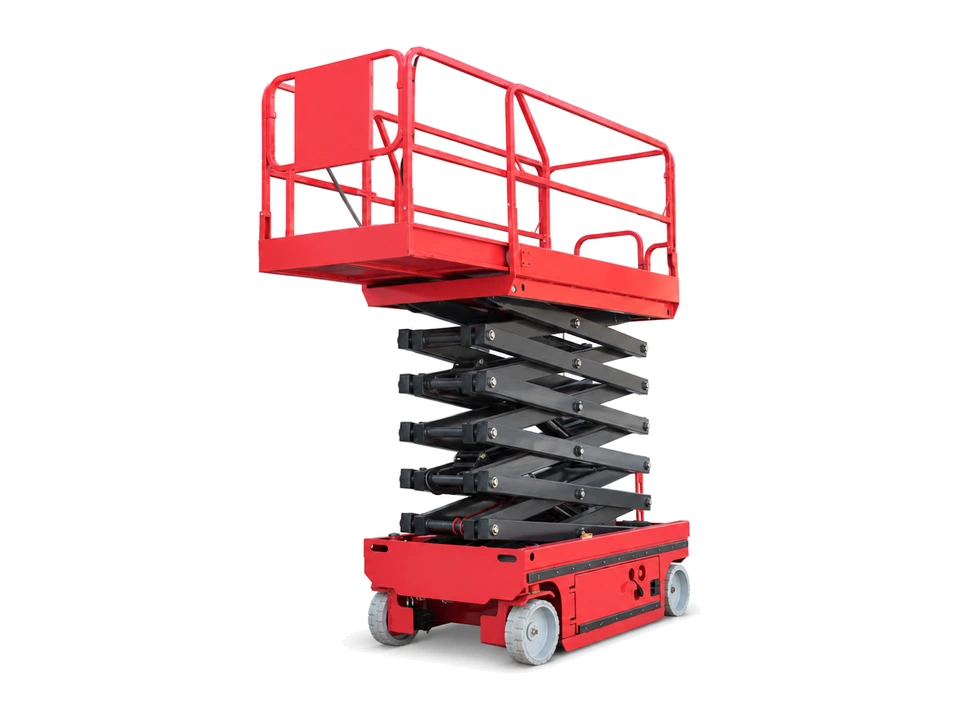
Tracked Aerial Access for Uneven Ground

Crawler Scissor Lift

A self-propelled tracked scissor platform for vertical work on rougher, softer or less-finished ground where conventional wheeled access is less suitable.

6–12 m catalogue platform-height range
320 kg rated platform load
900 mm extension deck
Crawler chassis with stabilisers
Platform height6–12 mCatalogue range
Rated load320 kgStandard table
Platform size2.4 × 1.17 mCatalogue
Extension deck900 mmCatalogue
Where It Fits

Vertical access beyond smooth concrete floors

Choose a crawler scissor lift where ground traction and low-pressure tracked mobility are more important than compact wheeled travel.

01

Outdoor construction

Cross compacted soil or unfinished areas to reach vertical installation and finishing tasks.

02

Utility and facility work

Access lights, services and structures where approach ground is uneven.

03

Landscaping and grounds

Move through softer outdoor areas with a tracked chassis, subject to site assessment.

Good fit when

The task is vertically above, ground is uneven or soft, and the machine needs tracked traction and stabilising support.

Consider another solution when

Use a wheeled self-propelled scissor on prepared floors, or an articulating boom when horizontal outreach or up-and-over access is required.

Specification Reference

Select height within one tracked platform format

Catalogue data below shows a 320 kg platform load and 900 mm extension deck. Confirm the current specification and ground limits before order.

ModelPlatform heightRated loadPlatform size (m)Extension deckApprox. weight
SJYL0.3-88 m320 kg2.4 × 1.17900 mm2500 kg
SJYL0.3-1010 m320 kg2.4 × 1.17900 mm2700 kg
SJYL0.3-1212 m320 kg2.4 × 1.17900 mm2900 kg

Ground bearing capacity, cross-slope, longitudinal slope, track marking and stabiliser footprint require site confirmation.

Send project details →
Engineering Details

Tracked mobility below a vertical work platform

The crawler chassis, stabilisers, scissor stack and extension deck are combined for access where wheeled movement is less practical.

01

Crawler travel system

Tracks spread machine weight and provide traction across suitable uneven or softer ground.

02

Scissor lifting structure

The vertical mechanism raises a 2.4 × 1.17 m catalogue platform above the tracked base.

03

Extension deck

A 900 mm deck extension increases reach along the work face without moving the base.

04

Stabilising supports

Deployable supports establish the specified working base before elevation.

05

Platform drive and hydraulic controls

One-person controls manage positioning and lifting within the machine limits.

Safety Configuration

Safety built around the operating condition

Tracks improve access but do not remove stability limits. Ground strength, slope, edge distance, stabiliser setup and wind remain critical.

01

Platform guardrails and gate

Perimeter protection defines the elevated work area.

02

Stabiliser deployment

Specified supports are placed on suitable bearing surfaces before lifting.

03

Emergency stop and lowering

Controls provide stop and recovery functions as configured.

04

Slope and level check

The working position must remain within the selected model’s levelling limits.

05

Track travel control

Low-speed movement and route planning reduce risk on uneven approaches.

06

Ground-edge clearance

Safe distance is maintained from trenches, drop-offs, voids and unsupported soil.

Operating note:Crawler traction does not make every surface safe. Assess soil bearing capacity, hidden voids, slopes, trenches, stabiliser pads, wind and overhead hazards before positioning or lifting.
Configurable by Project

Match the tracks to the terrain and the task

Platform height and load are only the start; access route, soil, slopes, support footprint and recovery plan determine whether tracked equipment is practical.

Send project requirements →
Height & load

Choose platform height within the catalogue series and confirm complete deck load.

6 m8 m10 m12 m
Ground assessment

Describe soil, compaction, slope, mud, gravel, obstacles and edge conditions.

Bearing capacitySlopeSurface type
Platform configuration

Confirm extension use, entry position and tools or materials carried.

900 mm extensionEntry gate320 kg load
Travel & support

Review track width, turning space, stabiliser positions and ground mats.

Crawler chassisStabilisersSupport pads
Power & environment

Confirm drive package, charging or fuel needs, temperature and destination.

Power packageOutdoor useDestination
For an accurate proposal, provide: Required platform height, total deck load, site terrain, slope, soil or pavement condition, access width, turning space, stabiliser area, wind exposure, travel distance and site photos.
From Drawing to Dispatch

Terrain reviewed before height selection is final

The model, tracked route, stabiliser footprint and operating environment are checked together before production and delivery.

01 / CONFIRM

Requirement review

Load, height, site and operating conditions are checked.

02 / DEFINE

Configuration & drawing

Dimensions, structure, controls and interfaces are documented.

03 / VERIFY

Build & inspection

Fabrication and functional checks follow the confirmed scope.

04 / DELIVER

Packing & support

Shipping preparation and technical documents are arranged.

Frequently Asked Questions

Before you specify Crawler Scissor Lift

Why choose crawler instead of wheeled self-propelled access?

Crawler equipment is considered where traction and weight distribution on rougher or softer ground are more important than compact travel on smooth floors.

What is the rated platform load?

The representative SJYL catalogue series lists 320 kg across 6, 8, 10 and 12 m platform-height models.

Does the tracked chassis eliminate the need for outriggers?

No. The representative machine uses stabilising supports. Follow the selected model’s setup requirements before lifting.

Can it operate on any slope or soil?

No. Ground bearing capacity, slope, edge distance and stabiliser support must remain within the approved operating conditions.

Can it drive while elevated?

Movement at elevation depends on the final model and control logic. Never assume it is allowed; follow the current manual.

What site photos are useful?

Send wide views of the travel route and work position, plus close views of slopes, soft ground, trenches, kerbs and access restrictions.