Building and façade maintenance
Reach signs, windows, roofs and services where direct vertical access is blocked.
 Articulating Boom Lift gallery
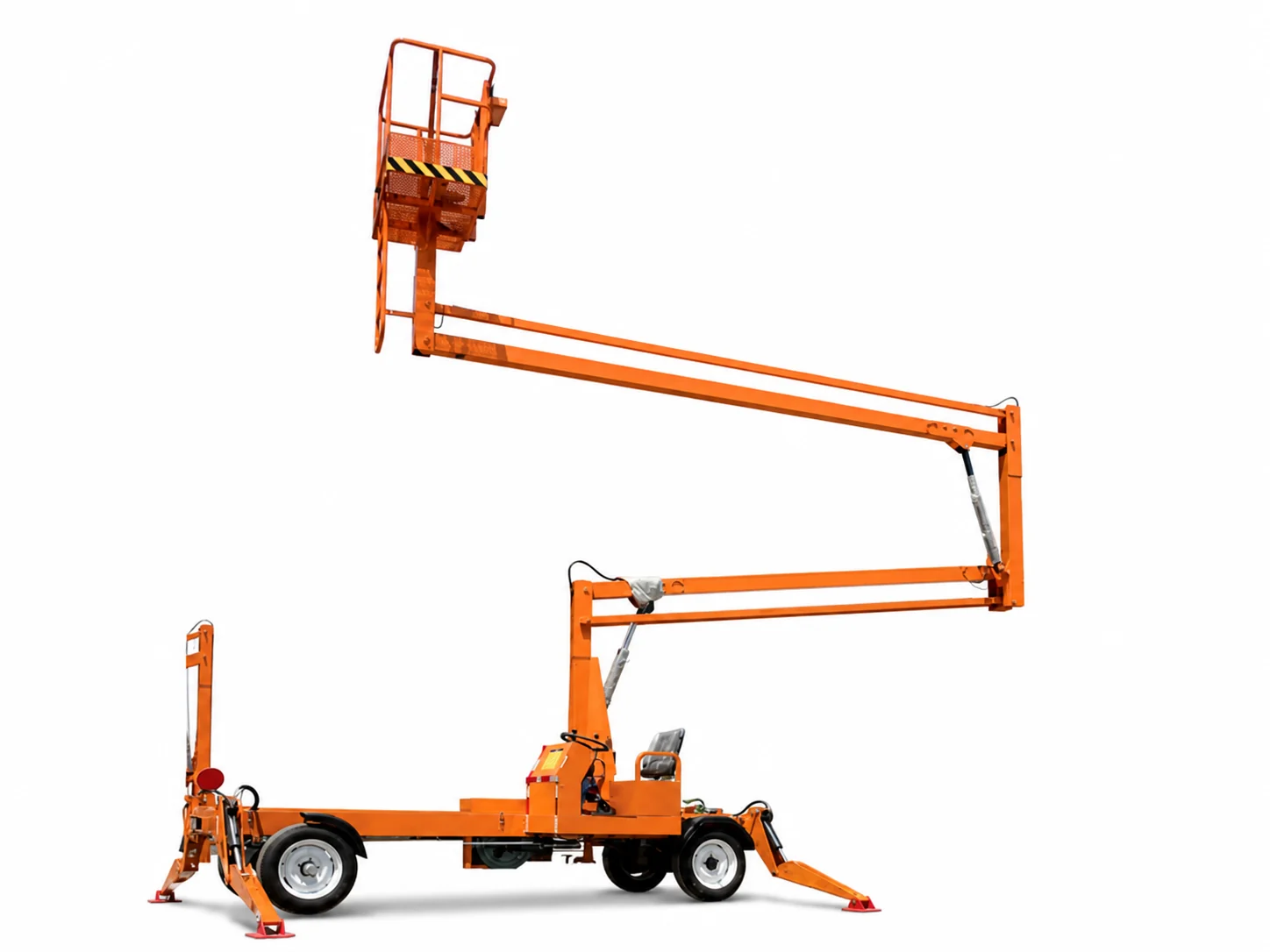
An articulated aerial work platform for reaching over or around structures when the work point is not directly above the machine base.
Choose an articulating boom lift when the platform must rise and travel horizontally over equipment, landscaping, roofs or other barriers.
Reach signs, windows, roofs and services where direct vertical access is blocked.
Position technicians near streetlights, electrical installations or elevated infrastructure.
Work above machinery, pipe racks and structures that require up-and-over reach.
The task needs horizontal outreach or articulated access around an obstacle and the base can be positioned and stabilised safely.
Use a scissor lift when the task is directly above and a larger vertical platform is preferable. Use crawler access when terrain is the main constraint.
GKT catalogue models are trailer-mounted references. Confirm outreach diagram, stabiliser footprint and current specification before order.
| Model | Max operating height | Platform load | Rotation | Overall dimensions (m) | Approx. weight |
|---|---|---|---|---|---|
| GKT-8 Reference | 9.7 m | 180 kg | 360° | 4.1 × 1.7 × 3.0 | 1600 kg |
| GKT-10.6 | 12 m | 180 kg | 360° | 4.1 × 1.8 × 3.0 | 1600 kg |
| GKT-12.5 | 14 m | 180 kg | 360° | 4.8 × 2.1 × 3.05 | 1700 kg |
| GKT-14 | 16 m | 180 kg | 360° | 5.1 × 2.3 × 3.25 | 1900 kg |
Maximum height does not describe the complete reach envelope. Review horizontal outreach, up-and-over clearance and permitted platform load together.
Send project details →Boom sections, turntable, chassis, outriggers and platform controls combine vertical height with horizontal positioning.
Multiple hinged arms create up-and-over access around structures and obstacles.
The turntable positions the boom around the stabilised chassis.
The basket carries the permitted operator, tools and materials within rated load.
Cylinders control boom elevation, articulation and rotation.
The towable base supports transport and establishes the working footprint before lifting.
Boom lifts create a changing load radius. Stability depends on complete outrigger deployment, level setup, platform load and operation within the reach envelope.
All specified stabilisers are fully deployed on suitable bearing surfaces before boom movement.
The guarded basket defines the operator work area.
Ground and platform controls provide stop and recovery functions as configured.
Operation remains within the selected model’s capacity and outreach chart.
The boom sweep and chassis area are kept clear of people and obstacles.
Safe distance is maintained from power lines and overhead hazards.
The correct model is selected from a reach envelope showing base position, obstacle height, required horizontal outreach and platform position.
Send project requirements →Provide vertical height, horizontal distance and obstacle dimensions.
Add occupants, tools and materials and keep within the reach-chart limit.
Confirm towing route, working footprint, outrigger bearing and ground slope.
Select destination-compatible drive, emergency system and operator stations.
State outdoor exposure, wind, temperature, corrosion and colour needs.
The work point, obstacle, base position and stabiliser footprint are reviewed together before the final model and configuration are released.
Load, height, site and operating conditions are checked.
Dimensions, structure, controls and interfaces are documented.
Fabrication and functional checks follow the confirmed scope.
Shipping preparation and technical documents are arranged.
A scissor lift primarily travels vertically. An articulating boom provides horizontal outreach and up-and-over access around obstacles.
No. Operating or working-height conventions may differ. Review the model’s platform height and complete reach chart before selection.
The catalogue table lists 180 kg. Confirm the current model specification and permitted occupants, tools and materials before order.
The machine base may not sit directly below the task. Required distance and obstacle geometry determine whether the platform can reach safely.
The chassis and each outrigger need firm bearing, acceptable level and adequate clearance from edges, trenches and underground voids.
Electrical hazards require planned clearance and appropriate procedures. The machine should not be assumed insulated unless specifically designed and certified as such.